PwC's recent study on the global retail apparel industry makes it clear that there are three main areas where Asian customers differ significantly from shoppers in the US and Europe.
WITH the continued growth of Asia's developing economies, an unprecedented proportion of the region's population is moving up the socio-economic ladder. Newly affluent consumers are not only spending more, they are also spending in different ways than their counterparts in more developed economies.
Findings from a recent study on the global retail apparel industry, titled PwC's Experience Radar 2013, show how local culture and practices in developing Asia drive different types of purchase decisions for regional consumers, and reveal features in the retail shopping experience that would inspire those consumers to pay a premium.
Beyond retail, cultural insights and learnings gleaned from the Experience Radar can also inform other industries seeking to push their brands into new markets.
From the study, there are three main areas where Asian customers differ significantly from shoppers in the US and Europe:
1. Outsized importance of brand, among the most loyal brand shoppers in the world.
Two-thirds of shoppers in developing Asia agree that access to leading branded goods is the heart and soul of their ideal apparel shopping experience.
These newly affluent consumers place so much value on it that they are four times more willing to pay for access to branded apparel than shoppers in developed nations.
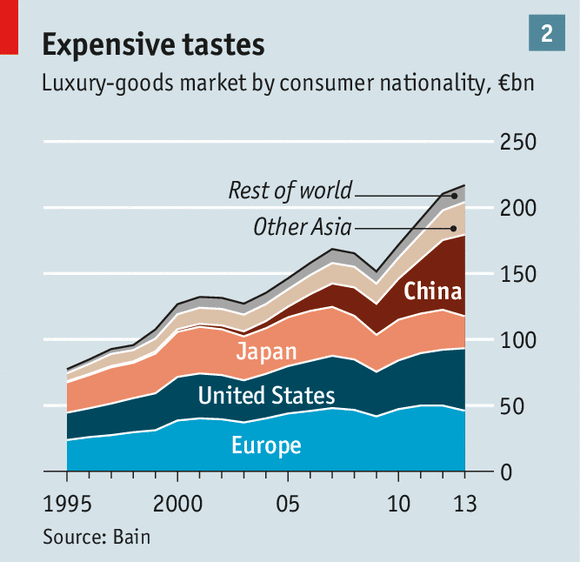
Status, style and quality are the leading determinants of purchase decisions. Shoppers in developing Asia are more willing than shoppers in more developed nations to splurge on mainstream and luxury apparel brands. Brands telegraph the shopper's status, which influences how he or she is perceived on the social ladder. And, among the upwardly mobile, branded apparel is seen as a way of tapping into the latest global styles.
In developing Asia, quality trumps price as a reason to buy. Apparel quality is not a given in Asia. In 2012 alone, developing Asia produced US$24 billion worth of knock-off apparel.
In developed countries with generally higher merchandise quality and stiffer competition, shoppers are far more concerned with price. One-third of shoppers in developing Asia cite quality as a reason to buy versus less than 1-in-5 who shop based on price. Among developed country shoppers, more than one-third emphasise price while just one-quarter base their purchase decisions on quality.
What this means for businesses
- Align price with brand equity: For luxury brands, premium pricing reflects exclusivity and quality, which attracts affluent developing Asia shoppers looking to showcase their status.
- Guarantee authenticity: Help assure consumers of the authenticity of your products by providing product information and demonstrations both in-store and online, and by posting online authentication guides to help consumers identify counterfeits.
2. Other people's opinions matter - a lot more.
Family and friends are the foundation of society in developing Asia. Relationships influence all aspects of culture, including shopping. To inform their decision-making, people create their own trust structures that combine their network of friends and family with influencers such as celebrities and blogs. People value the opinion of those they trust to drive their position on the social ladder.
In developing Asia, peer feedback and celebrity associations with brands are exceptionally influential in driving purchasing decisions. Consumers are much more likely to tap into the opinions of those they trust to figure out what brands to wear, which fashion bloggers to follow, and where to shop. Shoppers in developing Asia are twice as likely as shoppers in developed nations to weigh peer feedback before making a purchase (47 per cent versus 24 per cent respectively).
Shopping with (and for) partners and family is a much more common, everyday occurrence. Nearly two-thirds shop with their partner or family, versus 41 per cent in developed countries. And twice as many (60 per cent) shop for immediate family, versus 33 per cent in developed countries.
Social media plays a significant role in influencing purchasing decisions with shoppers in developing Asia who are also very likely to share their own experiences. Nine in ten shoppers report they are influenced to make purchase decisions by information found on social media (versus approximately 6 in 10 shoppers in developed countries).
Some 87 per cent report sharing their retail experiences via social media channels (double the percentage in developed countries).
Shoppers in developing Asia are willing to pay for more access to peer and/or celebrity opinions about apparel brands. They are willing to pay up to a 47 per cent premium to access platforms that provide peer or celebrity opinions about apparel. By comparison, shoppers in developed countries would pay a 17 per cent premium. In India, where Bollywood produces nearly double the number of films than Hollywood, 42 per cent say they are influenced by the styles and brands of celebrity cultures. Overall, developing Asian shoppers are twice as likely as developed country shoppers to say they are influenced by celebrity cultures.
What this means for businesses
- Activate your brand advocates: Using customer analytics and store knowledge, identify your key brand advocates and cultivate relationships with them through incentives such as discounts and invitations to exclusive events.
- Tap into celebrity culture: In countries like India and China, celebrity culture is a huge driver of lifestyle. Leveraging film stars, sports icons and other celebrities can be a powerful tool in building brand awareness.
- Educate employees: Shoppers in developing Asia are more likely to share a bad experience with friends and family. Educate and empower employees on how to turn issues into opportunities to deepen the customer relationship.
- Create engaging social media platforms: Give customers a platform on which to share and amplify good experiences and raise issues that may need to be resolved.
3. Digital channels are a much more integrated part of the shopping experience.
Seeking better access to branded merchandise and better shopping experiences, most developing Asia shoppers are shopping online - surpassing even their developed country counterparts. Nine out of ten shoppers in developing Asia browse or buy online (versus fewer than 8 in 10 for developed countries). Online experiences can provide the richer, more robust and more personalised shopping experiences that customers in developing Asia crave.
Shoppers are using their smartphones to check prices and reviews in-store, spending an average of 15 minutes online per store visit. One in three customers want to access enhanced product information via in-store tablets.
What this means for businesses
- Harness mobile: Today's shoppers are digitally savvy and crave additive features that use technology. Apps that provide regular style and merchandise tips or augment the in-store experience can attract savvy high-spenders and convince shoppers to stay longer.
- Invest in omni-channel: Many shoppers in developing Asia browse online but buy in-store. Providing customers a seamless experience that allows them to access product information, pricing and their own account information across channels is critical to building a strong retail brand.
So, newly affluent consumers are not only spending more, they are also spending in different ways than their counterparts in more developed economies. This requires businesses to develop a customer strategy that is tailored to the needs of the Asian customer based on a detailed understanding of Asian consumer behaviour and local market conditions.
The writer is director, customer & growth practice, PwC Southeast Asia Consulting




 In September, for example, Hurun published its list of the 1,000 richest people in China, who had average wealth of US$860 million. The list was topped by beverage magnate Zong Qinghou, worth an estimated US$12.6 billion.


